Rip It Up and Start Again: Postpunk 1978-1984
Compiled by Simon Reynolds, cover by Lotta Kulhorn
(V2, 2006)

I just got this import compilation and am loving it! It's a tie-in with the popular book of the same title by British music journalist
Simon Reynolds, who hand-picked all 20 tracks on offer here. Like the 2007 Soul Jazz compilation
D.I.Y: The Rise of the Independent Music Industry After Punk, it serves as an ideal primer to the era and the genre that Reynolds has definitively and exhaustively championed as the start of a real revolution in musical innovation.

All the usual suspects (
The Fall, The Slits, Scritti Politti, Siouxie & The Banshees, and the "Sheffield Sound" contingent of
Human League,
Heaven 17 and
Cabaret Voltaire) are here, as well as a few obscurities that had me stumped (
Pulsallama?
Fatal Microbes?). But I was most elated by the inclusion of the ultra-rare "Sluggin' fer Jesus," by
Cabaret Voltaire from the Belgian-only release
Eight Crepuscule Tracks (Interior Music, 1987) that utilized "found audio" sampling of infamous televangelist nutjob
Dr. Gene Scott (the subject of Werner Herzog's 1980 German TV documentary
God's Angry Man), who was always raising money to stay on the air for the sole purpose of raising money to stay on the air.
 Dr. Gene Scott: "Nothing under $100: I don't want gifts tonight, I want sacrifice!
Herein is are Simon's postpunk Top Twenty, a setlist which begins and ends - or, rather, rips it up and starts again - with music by The Fall and The Fallen: from the Fall's 1982 single "Fiery Jack" to "Dumb Magician" by the Blue Orchids - the band
Martin Bramah and
Una Baines formed after falling out with The Fall in 1979.
1.
The Fall - "Fiery Jack" (1982)

Erstwhile dock worker and full-time frontman Mark E. Smith called The Fall's music "Northern white crap that talks back," which I suppose was his way of describing their surly, working-class Mancunian mettle. In
Rip It Up, Reynolds writes:
"'Fiery Jack,' the Fall's fourth single, offered a vivid portrait of one of Manchester's finest sons, the hard-bitten and indominable product of five generations of industrial life. Fiery Jack is a forty-five-year-old pub stalwart who's spent three decades on the piss, ignoring the pain from his long-suffering kidneys. Surviving on meat pies and other revolting bar snacks, Jack is an inexhaustible font of anecdotes and rants. The music sounds stubborn, incorrigible, a white-line rush of rockabilly drums and rhythm guitar like sparks shooting out of a severed cable. Speed might be another of Jack's poison's, judging by his refusal to go 'back to the slow life' and lines such as 'Too fast to write/I just burn, burn, burn.' Based on older blokes Smith had met in Manchester pubs, Jack was 'the sort of guy I can see myself as in twenty years,' he told Sounds. 'These old guys have more guts than these kids will ever have.' Jack was the lad who grew old, battered by hard work and harder pleasure, but who never gave up and never gave in."
Watch The Fall play "Fiery Jack."See also:
www.visi.com/fall (fan site)
2.
Devo - "Praying Hands" (1978)
 "The left hand's diddling, while the right hand goes to war!"
From 1978's Eno-produced debut
Q: Are We Not Men? A: We Are Devo! Reynolds observes: "The album's most physically galvanizing song, 'Praying Hands,' was a stab at imagining a Christian fundamentalist dance craze." He quotes Mark Mothersbaugh explaining "Two of the biggest televangelists, Rex Humbard and the Reverend Ernest Angley, broadcast out of Akron. We saw how disgusting and evil these people were, and so we took delight in turning their cosmology upside down."
 The Importance of Being Ernest, Televangelist styleWatch Devo play "Praying Hands" (Live, 1978).
See also:
www.clubdevo.com (official band site)
3.
Pusallama - "The Devil Lives in My Husband's Body" (1982)
 Pusallama: the sound of 12 girls fighting over a cowbell
My favorite track is this obscurity, which alone makes this compilation an essential purchase! A minor cult and college radio hit, "Devil" is a song about a woman whose husband inexplicably starts barking and cursing and who seeks help from the witch who lives next door (the witch thinks he's possessed and recommends an exorcist), only to discover her hubby suffers from Tourette's Syndrome - and it's not covered by their insurance!
Pulsallama was a short-lived (yet apparently legendary) 12 piece all-girl percussion band who ruled Manhattan nightlife for a brief period between 1980-1982 and whose ranks included aspiring actress
Ann Magnuson (pre-Bongwater), DJ
Jean Caffeine and performance artist
Wendy Wild. It grew out of the ashes of the Ladies Auxiliary of the Lower East Side, a mock social club that Magnuson created during the zeitgeist of the early '80s Downtown NYC scene. Their sound has been described as "12 girls fighting over a cowbell." They released a handful of 12” singles on London's Y Records label and played regularly at Danceteria and Club 57, a church basement frequented by such Downtown scenesters as John Sex and Keith Haring. Jean Caffeine recalls, "Pulsallama was beloved for their rhythmic cacophony, theatrical stage antics, props and costumes, and their primal, yet glamourous absurdity. They had lots of fun, got their picture in
Interview magazine and had 15 minutes of fame."
The blog
lastdaysofmanonearth adds:
There were no guitars in Pulsallama. It was all bass, drums and vocals. On their scant recordings, the band added sound effects and other elements but at the core the sound was very tribal. Although the band was culturally a part of the Downtown NY scene, in retrospect their sound is more in synch with what was going on in the UK at the time with bands like Pigbag and Rip, Rig and Panic. Probably the biggest influence they had was inspiring Bananarama to form and even adopt a similar name while touring the UK.

From
Bleeding Panda Blog: "In early 1982 they were asked by Elliot Sharpe to contribute a song for a flexidisc to be distributed in a magazine. Since it was a freebie, they decided to give him their most retarded song, 'May.' With portable tape recorder in hand, he came to their rehearsal studio to record May for posterity, but as soon as he arrived, the gals started brawling. The fighting became so intense it disturbed the derelicts outside, who began screaming and pounding on the door. The band snapped out of it and settled down to do the song. During the song, the drunks started banging and screaming again, or so it sounds. It's hard to tell; it might just be Pulsallama.
A couple days later they were off to Asbury Park to open for the Clash, where an adoring audience of 6000 showered them with coins and cups of beer."
Listen to Pulsallama play "The Devil Lives in My Husband's Body."I have no idea who the dork in the above video is, but to see the official band video shot by Paul Daugherty, go to Jean Cafeeine's MySpace page (it requires you to sign in or create a MySpace account...such a bother!:
http://www.myspace.com/jeancaffeine/videos/video/28379576See also:
www.facebook.com/pages/Pulsallama (Facebook page) and
www.myspace.com/pulsallama (MySpace page)
4.
Cabaret Voltaire - "Sluggin' fer Jesus Pt 1" (1987)
 "Sluggin' fer Jesus" is one of eight crepuscule tracks by the Cabbies
The multimedia-loving Cabs - Richard H. Kirk, Stephen Mallinder and Chris Wtaosn - already devotees of William Burroughs' cut-up text sampling technique and J.G. Ballard's dystopian future landscape imagery, led where Brian Eno and David Byrne would later follow on their avant-sampling release
My Life in the Bush of Ghosts. As Reynolds observed, "Cabaret Voltaire pioneered what would eventually become an industrial-music cliche, the use of vocal snippets stolen from movies and and TV." Others towing the "found audio"-sampling line would later include Meat Beat Manifesto, The Shamen, Ministry, and so on and so on up until today's full-on Girl Talk samplemania...but it all started back here, folks (though not released until after
My Life in the Bush of Ghosts came out, the Cabs had sampled televangelist Dr. Gene Scott during their 1979 American tour)!
Like the Beatles excitedly discovering American radio on their first visit, the Cabs were fascinated by American media, especially the Idiot Box. As Reynolds wrote:
"Visiting the United States for the first time in November 1979, they caught wind of the impending shift to the Right with Reagan and the born-again Christian movement, which inspired their second album, The Voice of America. 'We were fascinated by America, but aware of its darker side. A big novelty for a bunch of kids from England, where TV finished at eleven P.M. and there were only three channels. We just locked into this televangelist Eugene Scott, who had a low-rent show that was all about raising money. And the only reason he wanted the money was to stay on the air.'"
Watch the Cabs play "Sluggin' for Jesus."Watch Gene "God's Angry Man" Scott winding up his FCC Monkey Band.
See also:
www.brainwashed.com/cv (unofficial fansite) and
www.artdesigncafe.com (Stephen Malinder site)
5.
Josef K - "Sense of Guilt" (1987)

Josef K were an Edinburgh band on the otherwise Glasgow-based Postcard Records label ("The Sound of Young Scotland!"), though one that didn't make it as big as their roster mates Orange Juice or Aztec Camera. Josef K was actually discovered by Orange Juice's Steven Daly, who convinced guitarist Malcolm Ross to change his band's name from TV Art to that of the protagonist in Franz Kafka's
The Trial. And, like Orange Juice and Aztec Camera, Josef K were considered (in Mark E. Smith's term) "New Puritans" - which was kind of like the "straight-edge hardcore" of its time. They frowned on drugs, drinking, and laddishness (though speed was OK, as it had Mod street cred!).
I had never heard of them before reading
Rip It Up, and had never heard anything by them until this, but must admit I like "Sense of Guilt." One Internet fan listed Josef K as yet another example of a great Scots band who (like early Orange Juice, The Fire Engines, and The Monochrome Set) set the template for
Franz Ferdinand.

Josef K. actually formed a sort of alliance with Orange Juice, with the bands supporting each other on tours and sharing a similarity in sound and mission.
"Like Orange Juice, Josef K had a a clean image (sharp, monochrome syuits from thrift stores) and a clean sound. Both groups shared a penchant for the cerebral side of American punk, groups such as Television, Pere Ubu, Talking Heads, the Voidoids...Inspired by Talking Heads 77 and the brittle clangor of Subway Sect, Josef K tried to get their guitars to sound as 'toppy' as they could. Says [guitarist Malcolm] Ross, 'It was just a matter of avoiding distortion and turning the treble up full. We liked playing rally fast rhythms, and you needed a really sharp sound for those to work. Using distortion meant you'd lose the effect.' Coiled and keen, barbed and wired, Ross's and Haig's guitars caromed off the fastfunk groove churned up by bassist davy Weddell and drummer Ronnie Torrance. 'In the very early days, it was just me playing guitar with Ronnie drumming up in his attic,' says [singer Paul] Haig. 'Ronnie'd always follow my rhythm guitar and we carried that on into josef K. He'd never listen to the bass, like drummers are supposed to.' The resulting 'strange chemistry' between Torrance's all-out exuberance and the abrasive flurry of the guitars gave Josef K their frenetic momentum."

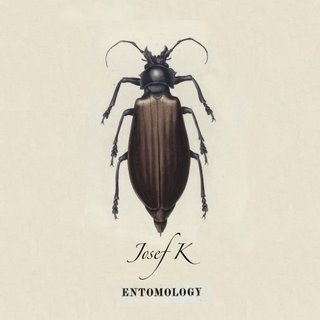
"Sense of Guilt" appears on Josef K's
Young and Stupid (1987) album, as well as the
Entomology compilation.
Watch Josef K play "Sense of Guilt."See also:
www.josefk.net (unofficial site)
6.
Scritti Politti - "P.A.s" (1979)
 Words Fail Me: the "pre-language release" 4 A SIDES
Frontman
Green Gartside was obsessed with language, especially on this track from the 4-track
4 A Sides 12" EP (Rough Trade, 1979). One of Green's "theory gods" was German philospher
Ludwig Wittgenstein, who argued that all of humanity's problems "stem from our bewitchment by language." We see this today with words that obfuscate (like obfuscate!) and lessen the impact of their real meaning, such as "enhanced interrogation techniques" (torture), "terminate with extreme prejudice" (kill), "collateral damage" (innocent civilians killed in military operations) - even in color-free code words like "urban" and "under-serviced communities" (African American) and "ethnically diverse" (non-White).
In Rip It Up, Reynolds writes: "Green sings about 1920 in Italy and 1933 in Germany as moments when 'the language shuts down.' In his most honeyed, airy tones, he ponders the mystery of popular for totalitarian: 'How did they decide?/What was irrational/Is national!' Then he imagines mass unemployment making the same thing happen in eighties Britain."
Of course, the Nazis were masters of misused language. Even "The Final Solution" was a tip-toe around the word "genocide," while "work camps" ("Work will set you free!") were basically "death camps" by another name.
See also:
bibbly-o-tek.com (the Scritti Politti source) and
The Scritti Politti Workshop.
7.
The Slits - "Spend, Spend, Spend" (1979)
 The Slits: all told, an impressive body of work
I want to buy (Have you been affected?)
I need consoling(You could be addicted)
I need something new, something trivial would do
I want to satisfy this empty feeling
 This empty feeling
Reynolds describes this anti-consumerism ditty from the album
Cut as "doleful skank" with "sidling bass and brittle-nerved percussion perfectly complementing the lyric's sketch of a shopaholic vainly trying to satisfy this empty feeling' with impulse purchases." I love how the very next track is "Shoplifting," wherein the shopping impulse gets hep to the five-finger discount!
Watch the Slits play "Spend Spend Spend" on German TV.
See also:
www.myspace.com/theslits (MySpace)
8.
Fatal Microbes - "Violence Grows" (1979)

Honey Bane: vocals
Pete Fender: guitar
Scotty Boy Barker: bass
Gem Stone: drums
John Peel broke this dub-friendly band whose average age was 13, making "Violence Grows" part of his 1979 radio setlist. Reynolds classified them as belonging to the "messthetics" aesthetic, along with other London vanguard bands on the Rough Trade label such as Scritti Politti and The Raincoats. In
Rip It Up, Reynolds writes:
"Another late-night hit in 1979 was Fatal Microbes' 'Violence Grows,' on which the baleful tones of fifteen-year-old punk Honey Bane survey London's frayed social fabric during what proved to be a banner year for street violence. Noting how bus conductors had learned to keep their mouths shut when thugs refused to pay, Bane taunts the listener, 'While you're getting kicked to death in a London pedestrian subway/Don't think passersby will help, they'll just look the other way.' Slowdrone guitar midway between the Doors' 'The End' and the Velvet Underground's 'Venus in Furs' swirls ominously behind her."
 Fatal Microbes
Their first record was one side of a 1978 Small Wonder 12" split with the Poison Girls, sharing two songs apiece. It received a fair bit of airplay on the John Peel Show at the time and as a result was re-released as an EP with a third song, "Cry Baby" in 1979 on the same label.
 A Taste of Honey Bane
Photogenic singer-babe
Honey Bane carried on solo and by 1981 broke in the UK Singles Top 40 with "Turn Me ON Turn Me OFF," which she performed on
Top of the Pops.
 Topless of the Popless
According to the blog
Siblingshot on the Bleachers, Bane went on to join anarcho-punks
Crass (recording under the name
Donna and the Kebabs), "who made much of her questionable teenage 'street chick' pedigree. When that failed to light up the charts, she did a few topless shots à la Wendy O Williams of the Plasmatics and hooked up with veteran wideboy of Sham 69 'fame,'
Jimmy Pursey. It was all down hill from then on."
Watch "Violence Grows."See also:
www.myspace.com/honeybaneband (Honey Bane's MySpace page)
9.
Robert Wyatt - "Grass" (1981)

Robert Wyatt? What seems to be an unusual inclusion in any "postpunk" anthology is justified by Reynolds due to the influence that long-haired "prog-rock" bands like Soft Machine (for whom Wyatt drummed), King Crimson, Can, and other experimental bands had on many postpunk icons, like John Lydon, Green, Cabaret Voltaire, Throbbing Gristle and the like.
This tabla-tapping tune has a Near Eastern/Indian feel to it that would not be out of place on a George Harrison album, and it's no wonder: the band on this Rough Trade split single is the Bengali ensemble
Disharhi (Abdus Salique, Esmail Shek and Kadir Durvesh), who perform their own song "Trade Union" on the flip (it also appears on Wyatt's
Nothing Can Stop Us album). ("Trade Union," by the way, is a call to Bengali workers in England to unite under the Trade Union banner, a cause that surely appealed to left-leaning socialist Wyatt. According to the buggers.com blog, "Songwriter Abdus Salique had to leave East Pakistan in 1970 because of left-wing political actitvities, but continued his work in East London, where he became the spokesman for the Bengali community At the moment Abdus Salique is Labour Councillor for Mile End East. Trade Union is a protest song following the racist attacks on the Bengali community in Brick Lane, London, in 1978. Trade Union is not a missed encounter but a successful fusion of music and politics.")
"Grass" is actually a song by Scottish poet-eccentric
Ivor Cutler (a card-carrying member of both the
Noise Abatement Society and the
Voluntary Euthanasia Society), who often collaborated with the mellifluous voiced Wyatt.
10.
Siouxie & The Banshees - "Slowdive" (1982)

The first single from the Banshees' fifth album, the Mike Hedges-produced
A Kiss in the Dreamhouse, which featured post-punk legend John McGeoch (Magazine, Visage, PiL) on guitar. Of this album, Reynolds wrote: "From its bejeweled, Klimt-inspired cover imagery to its exquisite textures, 1982's
Dreamhouse marked the Banshees' plunge into fin de siecle decadence. Musically, the influences were English psychedelia: Beatles, Syd Barrett, Traffic, and the Gothic-bucolic Donovan of 'Hurdy Gurdy Man' and 'Season of the Witch.'"
Banshees bass/keyboard player Steve Severin's songwriting had apparently been inspired by reading British SF novelist J.G. Ballard's [then] latest book,
The Unlimited Dream Company ("where the imagery is very lush, sensual, exotic"), resulting in what Reynolds claims is the band's "most adventurous and varied" album, one he characterises as "the perfect seduction soundtrack."
Watch the Banshees play "Slowdive."See also:
www.siouxsie.com (official site) and
www.thebansheesandothercreatures.co.uk.
11.
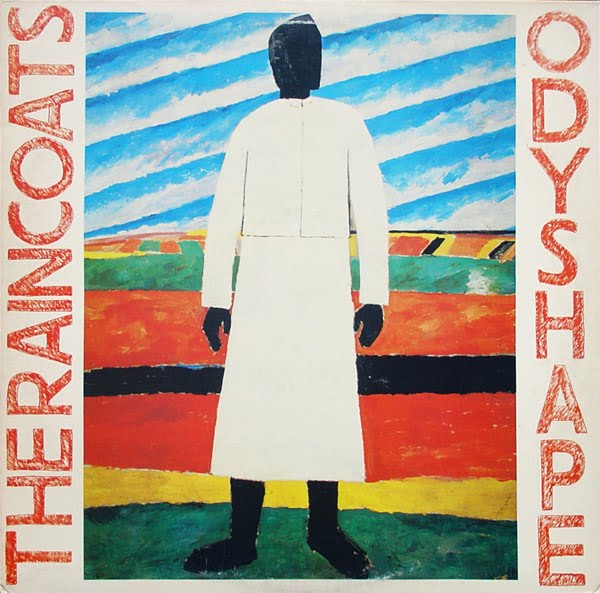
The Raincoats - "Only Loved at Night" (1981)

Gina Birch: Bass
Ana Da Silva: Guitar
Vicky Aspinall: Second guitar/violin
Reynolds writes:
"'Only Love at Night' is like a gamelan music box, the different patterns interlocking the intricate cogs. On this song, as with much of Odyshape, the group swapped instrumental roles (a common postpunk ruse to keep things fresh), with Aspinall playing bass and Birch contributing drony guitar while da Silva produces wistful chimes from her kalimba, an African thumb piano. Charles Hayward's clockwork percussion on the track, added after the fact, is decorative, just one of many parallel pulses."
Charles Hayward (from the band
This Heat) was one of several guest drummers (Robert Wyatt was another) who filled in for departed original drummer Palmolive (Paloma Romero, who split to join the Slits) on the Raincoats' second album
Odyshape, from whence "Only Loved at Night" is taken.
Watch the Raincoats play "Only Loved at Night."See also:
www.theraincoats.net (Official band site)
12.
Young Marble Giants - "Choci Loni" (1980)
 YMG: Music by introverts, for introverts
This classic "John Peel Band" (a description that begat a musical genre) was a Welsh trio comprised of brothers Stuart Moxham (guitar) and Phil Moxham (bass) and Phil's girlfriend Alison Statton (vocals) that, in Reynolds words, "went in for a kind of postrock pastoralism." "Choci Loni" is taken from their debut (and only) album,
Colossal Youth (1980), which became one of Rough Trade's biggest-selling records of the postpunk era.
"Young Marble Giants' music exuded a spare stillness that felt wonderfully fresh in 1980. Conceived as a revolt against punk by founder and primary songwriter Stuart Moxham, Young Marble Giants' sound was partially inspired by the soft mood music of light classical and easy listening, fairground music, and 'cheesy organ sounds' such as the Wurlitzers at the old movie palaces. Moxham developed a dry, choppy, suppressed-sounding style of rhythm guitar using an ultra-trebly Rickenbacker and a technique called 'muting' (resting his strumming hand on the strings t dampen the vibrations), which resulted in a peculiar melange of Duane Eddy's twangy tremelo riffs and Steve Cropper's crisp rhythm guitar. His brother Phil's bass - high, melodic, often mistaken for another guitar - was a beetling, scurrying presence. Moxham describes the interplay between the two instruments as 'almost like knitting,' a strikingly unmanly metaphor that beautifully captures the quiet radicalism of YMG's music. The rhythms, generated from a rudimentary drum machine, were played live on a crappy-sounding mono cassette player. Augmenting this sparse sonuc palette were occasional keyboards and subliminal wisps of weirdness produced using a ring modulator or devices cobbled together by a tech-whiz cousin of Moxham's.
But what really made Young Marble Giants special was the low-key, almost spoken singing of Alison Statton. She was Phil's girlfriend, and in truth Stuart never really wanted her to join the band. Indeed, when NME readers voted her the eight-best singer of 1980, Stuart spluttered, 'But Alison's not a singer! She's someone who sings. Alison sings as if she was at the bus stop or something. A real singer sings with more control.' Inadvertently, he captured precisely what was so perfect about Statton's undemonstrative vocals: a seductive ordinariness, a cool pallor of tone. Her image - print dresses, white tennis shoes, ankle socks - also fit the music's aura of fresh-faced provincial naivete.
Moxham recalls seeking to create a sound 'like a radio that's between stations, listening to it under the bedclothes at four A.M...these fantastic short-wave sounds and snatches of modulated sounds.' Without knowing it, a lot of people had been waiting for a sound as subdued and insidious as this."
Watch YMG play "Choci Loni".
See also:
www.youngmarblegiants.com13.
The Human League - "Dancevision" (1980)

Martyn Ware and Ian Craig Marsh actually recorded this synths-only track that appears on 1980's
Holiday 80 EP (and was also included as a bonus track on the
Travelogue CD reissue) as "The Future," an ensemble predating The Human League by a several months. In
Rip It Up, Reynolds quotes Martyn Ware as saying, "'When we started the Future, we were definitely on a mission to destroy rock 'n' roll.'" Ware had actually
tried to play guitar, "but gave up in disgust when he learned that to stop his fingers from bleeding he'd have to toughen the skin by soaking them in alcohol." For Ware and company, the summer of 1977 wasn't about the Punk Rock movement with its humdrum trad instrumentation of guitar-bass-drums, but rather the time of Donna Summer's "I Feel Love" and Kraftwerk's
Trans-Europe Express - two records that "arrived to show Marsh and Ware the shining synth-paved path to tomorrow...the pair were convinced that synths and machine rhythm were the way to go. 'We were dead against doing anything with guitars, full stop,' says marsh. 'It became our manifesto: No standard instrumentation.'"
In the Future, Ware and Marsh used a Korg 700S keyboard synth and a Roland System 100 "patch player" drum machine to generate "alien noises and futuristic textures" over simple "one-finger melody lines." Third member Adi Newton was the one most interested in abstract sound experimentation using tape recorders and, with his art school background, introduced the band to Man Ray, Duchamp, and other Dada and modern art influences.
Marsh recalled that the band initially dispensed with even giving themselves names, calling themselves A, B, and C. "It was all very computer oriented and linked to this lyric composition program we created called CARLOS: Cyclic and Random Lyric Organization System."
Reynolds likens it to a cybernetic version of the automatic writing and cut-up text techniques pioneered by William S. Burroughs and Bryon Gysin. In the end, the Future abandoned the experimentation and tried going with Adi Newton as a vocalist but, Marsh and Ware soon realized, "Adi couldn't actually sing a note, and more to the point didn't really
want to sing. He was more into voice as a weapon." Cutting him loose, Ware and Marsh opted to go singer-less - which is why "Dancevision" is an instrumental! Reynolds described the resulting instro as "sounding like a blueprint for Detroit techno with its neon lights glimmer and stringlike sounds evoking some ambiguous alloy of euphoria and grief."
Watch the Human League play "Dancevision."
This video parses clips from various films and documentaries illustrating what the Futurists were predicting for, um, the Future!
See also:
www.blindyouth.co.uk (fan site dedicated to early Human League 1977-1980)
14.
Thomas Leer - "Tight as a Drum" (1981)

Great industrial electronica from Glasgow, Scotland-native Thomas Leer's 1981 four-track EP,
4 Movements (the other tracks were "Don't", "Letter From America" and "West End"). None of the tracks were released as singles nor did any appear on an album. Leer often collaborated with industrial pioneer Robert Rental and later joined The Act. Released on ZZT (
Zang Tuum Tumb).
Watch "Tight As a Drum."See also:
www.thomasleer.co.uk15.
The Associates - "White Car in Germany" (1981)

"The Associates' ambition wasn't going to be sated by being critical darlings and cult favorites. They wanted to be the Bowie or Roxy of the eighties."- Simon Reynolds
In 1981, the Associates released their eighth single, "White Car In Germany" b/w "The Associate." Both tracks appeared on their second album,
Fourth Drawer Down. Amazon reviewer Jason Parkes of Worcester, UK comments that, "MacKenzie & Rankine's 'White Car...' appears to condense advances made by Can, Bowe, Eno & Faust in something like a pop-song - huge synths matching the Nietzschean-feel and centered in Europa." To augment the song's icy cool European aura, Billy Mackenzie's vocals were literally sung through a greaseproof paper and comb. Reynolds observes:
"One of the Associates' greatest songs, 'White Car in Germany' taps into the un-American 'Europe Endless'-ness of Kraftwerk and Bowie's Berlin trilogy. Mackenzie operatically declaims cryptic lines such as 'Walk on eggs in Munich' and 'Dusseldorf's a cold place/Cold as spies can be' over a metronomic march rhythm. There was definitely something Old World about the Associates' 1981 singles, an ancien regime atmosphere of fading grandeur."
Despite an eight-month run in 1981 of six single releases getting critical reviews, the Associates were dissatisfied. "At the beginning of last year I thought it was going to be the year of singles," Reynolds quotes Mackenzie recollecting in a 1982 interview. "And it was. The thing with our singles was that they got peeled off the turntable halway through! We want to keep our singles on the turntable this year."
The heavily Bowie- and Krautrock-influenced Edinburgh band disbanded in 1990 after four albums but re-formed a few years later. The band affectively ended with the
Billy Mackenzie's suicide, at age 39, in 1997.
 Bye-bye Billy
Depression and the death of his mother are believed to have contributed to Mackenzie's overdose from a combination of the antidepressant amitriptyline, temazepam, and paracetamol in the garden shed of his father's house in Auchterhouse, Dundee. The Cure song "Cut Here," written by Mackenzie's friend Robert Smith, is about his suicide.
Watch the Associates play "White Car in Germany."See also:
affectionate.bunch.pagesperso-orange.fr/ (French fansite)
16.
The B-52's - "Give Me Back My Man" (1980)

The second single from the
Wild Planet album, this is a somewhat unusual choice (as I can barely recall the B-52s being mentioned in the book
Rip It Up), but one I won't quibble with, as it's one of my all-time favorite B-52s songs. "I'll give you fish, I'll give you candy - I'll give you everything I have in my hands!" Cindy Wilson begs, just "Give me back my man." Memorable riff by guitarist Ricky Wilson is driven along by Keith Strickland's steady beat.
Watch the B-52s play "Give Me Back My Man."See also:
www.theb52s.com (Official band site)
17.
John Cooper Clarke - "Beasley Street" (1980)

A typically brilliant slice of verbiage from Mancunian poet Clarke's
Snap, Crackle & Bop album. Clarke looked (and dressed) just like Dylan circa his 1965 UK tour, but the Bard of Manchester had a cockney accent and more of a punk snarl to his verses.
Watch JCC play "Beasley Street" on Top of the Pops.
See also:
www.johncooperclarke.com (Official site)
18.
The Specials - "Friday Night, Saturday Morning" (1981)

This one's from the Specials' deservedly lauded
Ghost Town EP, of which Reynolds writes:
"'Ghost Town' turned out to be the most politically timely and momentous single since the Sex Pistols' 'God Save the Queen.' The single's three weeks at number one coincided withthe inner-city riots all across the U.K., verying Staple's warning about "people gettin' angry." The two superb tracks on the flip side of 'Ghost Town' made the whole record a kind of concept EP, representing three angles on the British way of living death. Lynval Golding's 'Why' addressed the racist thungs who'd attacked him outside the Moonlight Club the previous year, asking plaintively, 'Did you really want to kill me?' before the more belligerent Staple steps forward to shout down the fascist British Movement: 'You follow like sheep inna wolf's clothes.' Wonderfully wan and listless, Terry Hall's 'Friday Night, Saturday Morning' subverts the Easybeats' mod classic 'Friday on My Mind,' depicting a wage slave's dismal idea of big fun, which consists of sinking pints of lager at the discotheque while watching other people get lucky, then waiting in line for a taxi in the wee hours, clutching a meat pie in his hand, one foot planted in 'someone else's spew,' and wishing 'I had lipstick on my collar instead of piss stains on my shoes.'
The Ghost Town EP makes you wonder just how potent and unstoppable the Specials could have been if [Jerry] Dammers had allowed the other songwriting talent in the band to blossom."
Watch "Friday Night, Saturday Morning."
See also:
www.thespecials.com (Official band site)
19.
Heaven 17 - "I'm Your Money" (1981)

Heaven 17 (taking their name from
A Clockwork Orange), was formed as a side project of the British Electric Foundation (B.E.F.), the production company formed by Ian Craig Marsh and Martyn Ware after their departure from the
Human League in 1980. Adding singer Glenn Gregory, their first release was 1981's "(We Don't Need This) Fascist Groove Thing," which reached as high as #45 on the charts, despite a ban by the BBC.
One blogger added, "The Heaven 17 single 'I'm Your Money' has dated well, proto-rave material with similar themes to tracks by Depeche Mode ('Everything Counts'), Pet Shop Boys ('Opportunities (Let's Make Lots of Money') & the Flying Lizards' take on 'Money.'"
Watch "I'm Your Money."20.
Blue Orchids - "Dumb Magician" (1982)

The compilation ends with the
Blue Orchids, the post-punk neo-psychedelic band
Martin Bramah and
Una Baines formed after leaving The Fall in 1979. "Dumb Magician," the band's anthem (its mantra/chorus of transcendence - "the only way out is up" - was later quoted by fellow acidhead
Julian Cope on his
Autogeddon LP), appeared on the indie chart-topping album
The Greatest Hit (Money Mountain) (1982), which Reynolds called "a magnificent album of acid-soaked neopsychedelia teeming with pagan and pantheistic poetry." The Blue Orchids supported Echo and the Bunnymen on their 1981 tour;
Bill Drummond (Big in Japan, KLF) once observed that both bands were on a similar quest for "a glory beyond glories." The results were
The Greatest Hit for the Orchids and
Heaven Up Here for the Bunnymen.
Related Links:"
Rip It Up and Start Again" - the CD (Discogs)
Rip It Up and Start Again - the book by Simon Reynolds (Amazon.com)
Rip It Up and Start Again: The Footnotes