I AM A MEDIA MAXI-PAD ABSORBING THE CONTINUAL FLOW OF POP CULTURE.

THIS JOURNAL DOCUMENTS MY INTAKE OF ONE BOOK, ZINE, CD OR DVD A DAY. RATINGS ARE: ***** = Godhead, **** = Great, *** = Good, ** = Fair, * = Why Bother?

Monday, July 12, 2010

Jan & Arnie - "Gas Money"


Arwin Records (1958)
Listen to "Gas Money" MP3

I had never heard of this great song until I heard it covered by The Turtles at the 2010 Dundalk Heritage Fair (or as my GF Amy calls it, "The Fundalk Fair"). Though it was recorded over half a century ago, the topicality of America's addiction to fossil fuels remains timeless.

Yup, even in 1958 the price of gas was a big deal. Especially to James Dean-doting, hot rod-worshipping, testosterone-teeming teens who wanted to save up enough dough to be able to cruise for chicks or take their honey out to the drive-in.

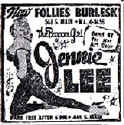
Though released in 1958 on Arwin Records (a small company owed by Doris Day's husband, Marty Melcher) by *Jan & Arnie* - who are pictured at right - "Gas Money" was really an early incarnation of Jan & Dean, back when Jan Berry and Dean Torrence were in a band called The Barons with a drummer name Arnie Ginsberg. (The Barons was actually a musical offshoot of Jan's University High School glee club of the same name, an all-male group that included future actor James Brunderlin - better known as James Brolin - future Beach Boy Bruce Johnston, and drummer extraordinaire Sandy Nelson.) But because Dean was off serving his time in the Army Reserves, the song was released under the duo name "Jan & Arnie." J&A actually scored a national Top 10 hit with an earlier single "Jennie Lee," which was about about a real-life stripper they'd seen at LA's New Follies Burlesk, Jennie "The Bazoom Girl" Lee.


Big tits, big hit

A cool blog called The Devil's Music tells the backstory on this curious wax platter:
As teenagers, Jan Berry and Dean Torrence were in a garage band, called "The Barons", with a third man, Arnie Ginsberg. Shortly before entering the army, Dean sang with Jan on a recording called, "Jennie Lee", but it was released under the name of Jan and Arnie. The song was a top ten hit and Jan and Arnie released two more singles,"Gas Money" and "The Beat That Can't Be Beat", that didn't fair as well.

On these humble, early sessions, Berry played piano while Ginsburg played a drum set consisting of nothing more than a piano bench and a baby's high chair being hit with drum sticks heavily echoed. The duo overdubbed their vocals, layering them in mono on the same two track machine, also heavily echoed. This 'master' was then brought to bandleader Don Ralke, who utilized a small combo of Los Angeles session musicians to overdub these songs into a releasable form for the "Arwin" label.

After a couple of years, Arnie had decided he had had enough and informed Jan that it was time to look for a new partner. Dean had just gotten out of the service, and once again, teamed up with his old friend to record with the Dore label. And thus Jan & Dean were born…

Teen Suite: All the girls flip for Jan & Dean!

This is a hard song to track down, but thankfully you can still find it on the Varese Sarabande label's 1995 CD release Teen Suite: Best of 1958-1962.

You can also watch a fan video dub of the song set to footage of "All Pontiac Day" (whatever that is).


***

"Gas Money" lyrics:

Say man, let's split (who's driving?)
Not me (well not me)
What'd ya mean not you?

(Chorus)
I need some gas money

I need some gas money
Well if you really want to go
You'll have to come up with some dough
I need some gas money

Well if I'm in your car
No matter where or how we are
You try to get my cash
'Cause you say you're out of gas
So just stay just where we are

(Chorus)
I need some gas mone

Well I done run out of bread
And that's the only thing I dread
I don't got any money
'Cause I spent it on my honey
So I'm going home to bed


(Chorus)
I need some gas money

Well if I'm in your car
No matter where or how we are
Oh you try to get my cash
'Cause you say you're out of gas
So just stay just where we are

(Chorus)

Well if you really want to go
You'll have to come up with some dough
I need some gas money

***

See also:
Barons 'n Bomps (jananddean web site)

Thursday, July 8, 2010

Cockeysville Library's Graphic Novels


Thursday, July 8, 2010

After hearing my friend (and unofficial "Mayor of Cockeysville" - not to mention self-styled "King of Men") Dave Cawley rave about the newly renovated Cockeysville Library's Graphic Novels selection, I stopped by this "Poster Child" branch of the Baltimore County Public Library system to see for myself. I wasn't disappointed.


Cockeysville Library

See, I work for BCPL's inner city rival system, the Enoch Pratt Free Library, where our graphic novel collection is merely OK. But Cockeysville's is, in a word, awesome. Yep, Cockeysville's collection blows ours away on virtually every level, from display sense to browsability to, most importantly, breadth and depth of collection. As they say in soccer about superstar players, it is "World Class."

It helps that every single book is in one easy-to-browse section, arranged by author on bookstore magazine-style shelves with the covers either face-out or spine-out for crowded areas. Now at Pratt, all the graphic novels are housed upstairs on the mezzanine area of the Humanities Department on the 3rd Floor. None of them are on a display shelve. Rather, they are hidden away in two separate "stacks" areas - one for oversize books (begging the question: how would a patron know to look there?), the other for "normal"-sized books. Furthermore, they are filed not by author name and title, but by the user-unfriendly academic-based Library of Congress classification call number system. In other words, you basically have to ask the librarian for help! This is one of the reasons my friend Dave has such a hard time finding graphic novels at the Pratt. Once you pick up on how our labyrinthine system works, all's fine and dandy, but it's that initial brick wall first-time browsers hit that makes one appreciate the old axiom: you don't get a second chance to make a first impression. And our first impression is: Huh? (a polite variation of WTF?)

Now, the Humanities Department has many fine and essential books dealing with literature, language and the popular arts, but I'm always surprised at how little we promote what is probably the most popular genre in the entire collection, especially since libraries are so keen these days to court the Youth Market and be cutting-edge hip. Did I mention that the insanely popular Otakon Convention is just around the corner at the end of the month? The mind boggles at how much material we could circulate if only it was readily visible for the estimated 25,000 locals and out-of-towners who will be "foot-trafficking" it through downtown Charm City at the end of July.

Anyway, I was excited to check out the new Pete Bagge book that Dave Cawley had just returned (he's a model library patron who always returns his materials on time!), but gathered up so many graphic novels that tickled my fancy that I didn't know what to do. See, I was all set to read the graphic novel my manga mate Chris Schatz loaned me, Osamu Tezuka's mammoth Swallow the Earth (1970), but now my attention deficit and OCD were kicking in with the over-stimulated, vertiginous buzz of too many choices.

Here's a partial sampling of the books that now constitute my Summer Reading List:

***

I love hard-boiled crime fiction and film noir in equal measure (some say they go together like sex and handcuffs), so the minute I saw the following two books, I had to grab 'em.


Tumor
by Joshua Fialkov and Noel Tuazon (illustrator)
(Archaia)

Tumor tells the story of Frank Armstrong, a washed-up private eye with a terminal brain tumor who starts uncovering clues to his wife's murder from 20 years before during a job to find a missing mob boss' daughter. Apparently the same writer and illustrator previously teamed up for the Harvey Award-nominated graphic novel Elk's Run, which is currrently being developed into a film. (Speaking of films, this graphic novel remided me a lot of Christopher Nolan's Memento, especially with it's now-and-then flashbacks/flasforwards as Armstrong fades in and out of consciousness between the past and the present.)

But I got hooked when I read the intro by Duane Swierczynski, which touched on one of my favorite cliches of "hard-boiled" detective fiction: the time-honored "sharp blow to the head that makes everything go bye-bye." It's a staple of the American School, from Carroll John Daly and Raymond Chandler right up to contempos like George Pelecanos, and Swierczynski calls the genre out on it: "...such blows to the head are completely ridiculous. It's not easy to bounce back from a severe concussion." (Especially when they occur every other chapter!) Swierczynski points out that Tumor turns this time-honored convention on its head, giving it a brand new bump on the noggin: "Like Phillip Marlowe and Three Gun Terry before him, P.I. Frank Armstrong is reeling from a blow...however, Frank's blow is much more realistic...and for that reason, utterly horrifying."

Yup, he's invented Cancer Noir. Ain't that a kick in the head!


There are a number of "extras" including at the end of the story (storyboards, interviews, a Frank Armstrong short story), but my favorite is Fialkov's essay about Tumor's setting, Los Angeles; this essay proves that, like Chandler and Ellroy before him, he understands that his main character is the city itself.

But the most interesting thing about this book, I later discovered, was that it bucked industry tradition by becoming one of the first graphic novels to be released digitally on Amazon's Kindle before any ink was put to paper! Yup, it completely reversed ye olde print-to-digital model.


Richard Stark's Hunter
by Richard Stark and Darwyn Cooke (illustrator)
(IDW Publishing)

Cinematically, Donald Westlake had me hooked by Parker with Lee Marvin in Point Blank and with Mel Gibson in Payback - though the author specifically stipulated that the name "Parker" could not be used in these screen adaptations. Now he's got me graphic novely hooked, thanks to Darwyn Cooke's metallic blue-steel cool pictures.

Here's what the folks at Publisher's Weekly had to say: "Cooke has transformed the first volume of the late Donald Westlake's long-running Parker series (written under the pseudonym Richard Stark), about an indomitable outlaw, into a smashing graphic novel, making its ferocious mood and retro aesthetics the stars of the show. Parker belongs to the bottom of the urban jungle's economic strata, but the top of its food chain—anyone who stands between him and his revenge is doomed, whether they're trying to resist him or just happen to be in the way."

All I know is, Parker is one serious bad-ass with authority issues. An obvious candidate for a Lithium prescription in today's world.

***


Abandoned Cars
stories by Tim Lane
(Fantagraphics Books)

The back cover described Tim's Lane's debut collection of graphic short stories as "noir-ish narratives" of desperate and haunted characters that exist on the margins of society - denizens of what Lane himself calls "The Great American Mythological Drama" and what people like me call People Like Me. That had me hooked, but then I opened the pages and his line-heavy black-and-white images made me think of Charles Burns - and that sold me outright.


All and Sundry: Uncollected Work 2004-2009
by Paul Hornschemeier
(Fantagraphics Books)

I read Hornschemeirer's interesting The Three Paradoxes and I'm sure I've seen his work turn up in the pages of the New Yorker as well as The Wall Street Journal, so I was pre-sold on his work, which is very clean and stream-lined and kind of reminds me of Daniel Clowes and Adrian Tomine's styles. But what really got me was his "Literature Through the Ages" (shown below), which capsulizes the (de)evolution of communication from primordial cavemen grunts to their modern equivalent, cell phone *texting.* Brilliant!


Literature Through the Ages

Hornschemeier - who also has an excellent blog (newsandheadlice.com) - has done a lot of one-offs and freelance work, like album designs for Luaka Bop and Melanie Pain, movie posters, and experimental strips like the wordless "Huge Suit Among the People" that he produced for a German magazine. But I like his gag stuff best.


Hornschemeier's "Gotta Pay the Bills" strip

***


The Toon Treasury of Classic Children's Comics
selected and edited by Art Spiegelman & Francoise Mouly
(Abrams Comicarts)

Beautiful and unweildly (I'll need two hands to hold it up when reading in bed!) and chock-full of the Golden Age of innocent kids comix: Little Lulu, Little Archie, Egghead Doodle, Nutsy Squirrel, Uncle Wiggily, Melvin Monster, the Tweedle Twins, Powerhouse Pepper, Gerald McBoing-Boing, Burp the Twerp, and J. Rufus Lion! But I must admit, I picked it up for the politically incorrect (squinty-eyed Tibetan ducks!) Uncle Scrooge strip "Tralala" (drawn by the reliable Disney vet Carl Barks) that had the senior McDuck visiting the Himalayas and speaking fluent Cathay, which he picked up when he was a Yak buyer in Tibet!

I really like the old school artistry on display in this collection, edited by Art Speigelman and his missus Francoise Mouly, by such Old Masters as John Stanley (Little Lulu, Nancy and Sluggo, Melvin Monster), the stylish Andre LeBlanc (who worked - uncredited - on The Phantom and Apartment 3-G, as well as his own strip Intellectual Amos), Sheldon Mayer (Scribby, Sugar and Spike), Jack Cole (best known for Plastic Man but here represented by his kiddie strip Betsy and Me), children's illustrator P. D. Eastman (who collaborated with Theodor "Dr. Seuss" Geisel on the comic Gerald McBoing Boing), Basil Wolverton (Powerhouse Pepper), E.C. Comics/MAD magazine legend Harvey Kurtzman (represented here by his strips Hey Look! and Egghead Doodle), and future MAD magazine regular Dave Berg (The Tweedle Twins). And I was amazed at how well and realistically Walt Kelly - best known for Pogo - drew for publications like Fairy Tale Parade comics, especially in stories like "Prince Robin and the Dwarfs."

But my favorite may well be Will Eisner Hall of Fame inductees C. C. Beck and Pete Constanza, whose Captain Marvel adventure "Captain Marvel in the Land of Surrealism!" not only looks great, but also manages to knock the stuffing out of post-modern art ("No! No! Take it away, please!" Captain Marvel cries when confronted by artist Leonardo Vince's Cubist abstract painting, shown below).


***

Oh, almost forgot the whole reason I went to Cockeysville - Peter Bagge's new book!


Other Lives
by Peter Bagge
(Vertigo)

I like Peter Bagge. His comic style may be one-dimensional, but so was The Ramones' music, and I love that. Moreover, I really relate to his post-slacker culture insights, just as I do with that other astute/acute "American Observer," Daniel Clowes. And God knows they're both easier to read that all the experimental graphic novel artists out there like Chris Ware, who though immensely clever and talented and all that, still give me a headache toiling through their multi-leveled work. (I grew up on the Charles Schulz four panel gag strip; there's only so much deviation my Peanuts-sized noggin can handle!)

This one's about bitter writers (agagin, I can relate!) and Internet losers - specifically role-playing Avatar-icon geeks. That part was amusing, but I just finished this one last night and it was a major disappointment. The overly serious ending is unfamiliar turf for Bagge - even coming on the heels of his collected strips from the Libertarian mag Reason, Everyone is Stupid Except for Me (2009). After many graphic novel hits, I gotta say this one represents a serious misfire for Bagge.

***

OK, it's too hot to continue typing; the sweat is dripping off my brow and I feel like an extra in Akira Kurosawa's sweltering summertime classic Stray Dog (1949), which I just re-watched last night. Time to turn on the AC and get my read-on!

Monday, July 5, 2010

Go Pills - "What I Need"


Go Pills - "What I Need"
Live @ Atomic BBQ Party
Saturday, July 3, 2010

My new favorite Baltimore band! Go Pills are one of five bands Bawmer Renaissance Man Skizz Cyzyk plays in (The Jennifers, The Awkward Sounds of Scott & Skizz, Garage Sale, Blister Freak Circus). Skizz steps out from behind the drums to sing and play acoustic and electric ukulele with the Go Pills, supported by another legendary local drummer, Batsworth; another legendary guitarist in lapsteel player Randy Austin, Jr.; and upright bassist Tom Balog.

Tuesday, November 10, 2009

The Damned United


The Damned United
directed by Tom Hooper
written by Peter Morgan, based on the book by David Pearce
Cast: Michael Sheen (Brian Clough); Timothy Spall (Peter Taylor); Colm Meaney (Don Revie); Jim Broadbent (Sam Longson)
(Sony Pictures Classics, 2009, 97 minutes)

When It Reigns, It Pours

I saw this great film, penned by hottest-Brit-screenwriter-of-the-moment Peter Morgan (The Last King of Scotland, The Queen, Frost/Nixon) and starring hot-Brit-actor-of-the-moment Michael Sheen (he played Tony Blair in The Queen and David Frost in Frost/Nixon), at the Landmark over the weekend. I like British soccer and my girlfriend likes British films, so it wasn't a hard sell to get her to go to a movie ostensibly about the Leeds United football club and the dismal 44-day reign in 1974 of its enigmatically brilliant-cum-destructively megolomaniacal big mouth manager Brian Clough (pronounced "Cluff" as in "rough"), a former star striker (251 goals in 274 games for Middlesbrough and Sunderland) who at one time was called the Muhammed Ali of British football for his brand of brash trash-talking.

Besides, though my GF Amy would much rather watch Cops or the Home Shopping Network, she'll tolerate watching soccer games if Ray Hudson's announcing ("I like that crazy Geordie guy - he's funny!") or if Chelsea or Tottenham are playing - the former because she loves the band Madness and singer Suggs wrote the anthem "Blue Day" for his East London heroes...


Suggs Song Blue

...the latter because she loves their Shakespeare-derived name Hotspur (although everyone just calls 'em "Spurs"). She also likes Stoke City because their team name is The Potters (after the pottery industry in Stoke-on-Trent) and Hull City because they make her think of the Rutles song "Finding Your Bride in the Arms of a Scotsman from Hull." Plus she loves all the drunken singalongs in the bleachers and will start laughing the minute she hears a good "Here we go" or "Who are you?" from the stands. So, like I said, it wasn't a hard-sell.


I knew nothing about Clough or the Leeds United "glory years" of 1961-1974 when they dominated English football under manager Don Revie, but I remembered liking Leeds in the early Noughties during their last spell in the top-flight Barclay's English Premiere League - right before financial troubles at the big club finally saw them relegated to the minor leagues in 2004. (They currently toil in the 3rd-tier League One.) Under manager David O'Leary (1998-2002), Leeds routinely finished in the EPL's top five and I loved his lineup, which before financial woes included Robbie Keane, Alan Smith, Jonathan Woodgate, and Australian superstars Harry Kewell and "The Duke," Mark Viduka. I'll never forget seeing "Super" Viduka score four goals to single-handedly lift Leeds over Liverpool 4-3 at Elland Road in 2002. (It's hard enough to forget Viduka as is, because he bears an uncanny facial resemblance to comedian Fred Willard!)


Separated at Birth: Willard and Viduka


Super Viduka's 4-goal spree against the Reds

The big man's deft touch and ability to hold the ball up while being muscled in the box made him the definitive back-to-the-defender striker, the likes of which are only seen today in the form of Chelsea's Didier Drogba or Barca's Zlatan Ibrahimovic.

But I digress...back to the film, which despite all this talk of football isn't really so much about kicking a ball around as about things like male bonding, interpersonal relationships, ego and one man's Capt. Ahab-worthy obsession - not to mention that particularly Anglo "us vs. them" fixation about Northern vs. Southern that dominates all aspects of British sport and culture (whether it turns up in Morrissey lyrics or in rivalries like Mancunians Oasis dissing Londoners Blur). The Chicago Tribune's Michael Phillips saw the film mainly as the story of a rocky marriage between Brian Clough and his lifetime assistant coach and best friend Peter Taylor (Timothy Spall of the Harry Potter films and BBC TV's The Street). In fact, it was Phillips insightful review "Small Soccer Tale Pays Off Big" (reprinted in last Friday's Baltimore Sun) that sold me, the soccer fan, on this film being more than just an 11-on-11 kickabout. His words, reprinted below, do more justice to this fine film than I am capable of.

***

Small soccer tale pays off big

by Michael Phillips
Tribune Newspapers critic
October 16, 2009

In most sports movies the big moments are big: Robert Redford's star-spangled mega-homer in "The Natural."

By contrast the best of many good scenes in "The Damned United," a winner for soccer fans and soccer idiots alike, is a small one. Brian Clough, one-time English footballer turned failed manager of the Leeds United club, spends a match alone in the changing room. Through smeared windows we see, and hear, the crowd roaring approval in between tense, uncertain passages of time. Michael Sheen, who played Tony Blair in "The Queen" and David Frost in "Frost/Nixon," portrays Clough, and he's marvelous, suggesting warring strains of confidence and doubt in his nervous pacing and darting eyes.

Sheen dominates director Tom Hooper's vivid examination of arrogance, pride, Humpty Dumpty-size falls and self-rehabilitation. He is not, however, the whole show. Drama is a balancing act, and one of the great strengths of screenwriter Peter Morgan lies in the way he juggles characters and shifts the expected emphasis from one playing field to another.

Morgan's work for the screen often pivots on a shadowy antagonist, as with dictator Idi Amin in "The Last King of Scotland" (which he co-wrote), or with Richard Nixon in Morgan's own adaptation of his play "Frost/Nixon," or with British royalty as embodied by Helen Mirren in "The Queen." The same strategy applies in "The Damned United" and its use of Don Revie, the successful manager of Leeds United before Clough's disastrous 44-day tenure. The reliable, granite-like Colm Meaney does a fine job with Revie's sneers and smiles, but it's not his story. Nor does "The Damned United" devote much screen time to how Clough and his invaluable assistant manager, Peter Taylor (Timothy Spall), went on to glory with the Nottingham Forest club.

Rather, Morgan sticks to his dramatic guns and gives us Clough, in present-tense 1974 and flashback sequences, as he realizes how much he needed Taylor, and how much his Leeds players detested him. The crucial story here is about a marriage dissolving and then reconstituting. Clough and Taylor are the symbolic spouses (they had real ones as well). "The Damned United" reminds us that backstage characters often have the most to tell, and Sheen and Spall are both first-rate character men who happen to be tackling leading roles.

The grim Yorkshire weather is captured just so by cinematographer Ben Smithard. The movie gives you its little dose of triumphalism in a coda, but one of the chief virtues of this unusually honest sports film is its determined focus on the losing before the winning, and the hard lessons to be learned from it.

***
Oh, as a postscript, I have to mention that while attending this weekend's Sherlock Holmes Society event at the Enoch Pratt Central Library, I sat behind a guy wearing a yellow-and-white English football scarf for...Leeds United! I had never seen anyone wearing Leeds gear in all my time in all the soccer bars in Baltimore until that Saturday afternoon. Something must be in the air...a strong Yorkshire draft coming across the pond to Charm City. Anyway, I told the guy about the movie and he was excited...

Private Eleanor


Private Eleanor: On top of the world

Thanks to the Enoch Pratt Central Library's local music collection, I just discovered my favorite local band: Private Eleanor. And as luck would have it, they no longer exist. Typical me: I don't miss my water 'til my well runs dry. The album I heard was their fourth and final recording from 2007, Sweethearting. As the band is currently on hiatus, it remains their swan song in absentia.


Sweethearting
Private Eleanor
Beechfields (2007)

The band's introspective dreampop sound has been compared favorably to everyone from American Analog Set to Yo Lo Tengo, with nodding winks along the way to Big Star, The Go-Betweens, Mojave3, Red House Painters, Elliott Smith, and Wilco. Me, I hear SF's Sneetches in there for some reason. Whatever musical signposts they point to along the way, Private Eleanor's sound is (was?) definitely Twee with a capital T. And I like that. I mean, how can you not love a band that names an album Deciduous?


PE performing live

Though they've gotten some good national press, my favorite description of Private Eleanor comes from the Baltimore City Paper's Jess Harvel, who's a good a music writer as there is around town:
"Private Eleanor makes music so perfect for solitary drives on the cusp of late night/early morning that you want to rewind back a decade and listen to the band's music on an unlabeled C90 in your old beater's tape deck...The drizzly, cinematic sweep of Stahl's road-weary, twentysomething heartbreak is more sharply observed than ever, set to a lush swirl of bells, vibraphone, Hammond organ, and Rhodes piano meticulously arranged for the tingling of spines, crisply recorded and hitting all the band's now well-established sweet spots...Each song works beautifully as a little standalone slice of baroque indie-pop."
- Jess Harvel, Baltimore City Paper


PE performing live at Fletchers

According to the band's blog circa June 2009, leader Austin Stahl recorded a solo record that's available for free download at AustinStahl.net.

"It's a record I made by myself at home, just for fun (much like the earliest PE stuff) but I liked it enough to want to share it with you. This is the first music I've ever released under the name Austin Stahl. Go download it! If you like Private Eleanor music at all, I think you'll enjoy it." Heads up, Stahlinists!

***

DIGITAL DOWNLOADS

Private Eleanor's back catalog is now available digitally at their digital store: privateeleanor.bandcamp.com.

Their first three records had never been available digitally, until now... And their first album, Deciduous (2002), had been out of print completely, unavailable in ANY form, for over five years. As Austin Stahl says, "Well, we've remedied that at long last. Go get them all!"

***

Here's the band's press bio from the Beechfields record label.

PRIVATE ELEANOR BIOGRAPHY

“Built upon sturdy melodies and the type of harmonies rarely practiced these days, they dared to be genuine and pretty, hurt and poppy, confused yet direct. They made pop that the likes of Teenage Fanclub and Mojave 3 would happily call their own.”
—John Foster, BrightestYoungThings.com

Private Eleanor was a band from Baltimore, Maryland, who over the course of little more than five years was responsible for four records of unfashionably lovely folk-pop. For now, they’re on indefinite hiatus, having left behind little but those remarkable records – full of sly hooks, sparkling textures, and evocative, poetic lyrics as good as any you’re likely to hear.

Songwriter Austin Stahl began the band on a four-track cassette recorder in the bedroom of a Baltimore rowhouse, crafting a pair of intimate albums with the help of a rotating cast of friends. Stahl was soon hailed as the city’s best songwriter by the local City Paper, and began performing live with a full-time band. The higher-fidelity No Straight Lines followed in 2005, gaining slightly wider release (via Maryland label The Beechfields) and earning critical accolades on a national level (75orless.com called it “the final album Elliott Smith should have made.”). Before long, the band was bringing its subtle, harmony-laden pop songs to half-empty rooms throughout the nation.

Sweethearting was released in 2007. Recorded and mixed with the help of T.J. Lipple (Aloha) and Chad Clark (Beauty Pill), the album was performed mostly live in the studio, and showcased more than ever the vocal harmonies between Stahl and fellow singer Marian Glebes. The shifting backdrop provided by Chris Merriam (drums), Bruce Sailer (bass), and Drew Stevens (Rhodes/piano/organ) made for the band’s most varied and sonically deep record – at times the hushed vocals and vintage keyboards call to mind American Analog Set; other moments resonate with the quiet emotion of Ida or Red House Painters; some of the louder, catchier songs could pass for Yo La Tengo tackling your favorite Big Star tunes. It was the band’s best-received record to date, but they were unable to tour behind it and went on hiatus soon after.

As of this writing, Private Eleanor has no current plans to perform or record. Two new compilations feature what are, for now, the band’s final recordings: Love Goes On, a tribute to Grant McLennan of the Go-Betweens, for which Private Eleanor was chosen to contribute a cover of the title track; and This City of Neighborhoods, a new compilation from the Beechfields Record Label.

LABEL CONTACT
The Beechfields Record Label
P.O. Box 6732
Towson, MD 21285
info@thebeechfields.com
www.thebeechfields.com

BAND CONTACT
pe@privateeleanor.com
www.privateeleanor.com

AUSTIN STAHL CONTACT
www.austinstahl.net

Thursday, November 5, 2009

Shepherds of Berneray

The Shepherds of Berneray
a film by Allen Moore & Jack Shea
(Canada, 1981, 54 minutes)

Credits:
filmed and edited by Allen Moore
conceived and produced by Jack Shea
narrated by Finlay J. MacDonald
executive produced by Robert Gardner
principal characters: Kate Dix, John Ferguson, Angus Beag MacLeod, Angus and Chirsty Ann Munro, John and Christine Munro


The original Ram's Head, Live - from Berneray!

Last night I was among a handful of cineastes that were treated to a special screening of Allen Moore and Jack Shea's 1981 documentary The Shepherds of Berneray at the Hexagon on N. Charles Street. The event was the latest offering in Miguel Sabagol's continuing "Free Wednesday 16mm Film Series" at the Hexagon, which the Baltimore City Paper named "Best Multi-Purpose Space" in its 2009 Best of Baltimore issue.


Allen Moore

I only heard about the screening because, in addition to being an award-winning cinematographer for Ken Burns and a well-respected film instructor at the Maryland Institute, College of Art, Allen Moore is also a regular patron of the Enoch Pratt Central Library, where he often pops in to check out titles from our 16mm film collection. So when he mentioned last week that he was screening one of his films at the Hexagon, I had to give props to a filmmaker and lenser that I greatly admire. I wasn't disappointed. At the risk of sounding like a hyperbolic fanboy, I think film historians will rightly rank Moore's cinematography alongside that of the all-time great lensmen. And, beyond knowing how to frame and present "pretty pictures," Moore is also an accomplished director and editor, at least from I've seen of his own films.

Small wonder then that the film - made with funds from The Film Study Center, Harvard University, The Highlands and Islands Development Board of Scotland, and The Scottish Arts Council - won a CINE Golden Eagle, a Red Ribbon at the American Film Festival, and a Special Mention of the Jury at Cinema du Reel. Soon after completing The Shepherds of Berneray, which was shot over 12 months from May 1978 to 1979 and took another 18 months to edit, Moore received a John Simon Guggenheim Memorial Fellowship in Filmmaking from December 1982 to November 1983.

So what and where is Berneray? Quickly searching the Internet for a Wikipedia article, I learned that Berneray (Scottish Gaelic: Beàrnaraidh, from Old Norse for "Bjorn's island") is a small island to the north of North Uist in the Sound of Harris, Scotland.


It is one of fifteen inhabited islands in the Outer Hebrides, measuring 2.5 acres with a population (as of May 2009) under 124 permanent residents. It is famed for its rich and colourful history which has attracted much tourism - including Charles, the Prince of Wales, who in 1987 visited the island to live a normal Berneray life as a "crofter" (small-scale farmer). (Prince Charles lived and worked with a crofter for one week and his visit spawned the 1991 television documentary, A Prince Among Islands; he returned to the island in 1999 to formally open the causeway connecting Berneray and Otternich on North Uist). Its main industries are fishing and sheep, but because seafood is a valued export to the mainland, the island's lifeblood is its sheep. Hence the focus of Moore's remarkable film, which documents one year in the life of the sheep and their Gaelic-speaking (and singing) keepers, split into seasonal chapters.


Berneray: Shaped like the headstock on a Fender guitar

The documentary begins and ends with an elderly woman (Kate Dix) speaking in her native Gaelic (thank God for subtitles!) outside her croft, a perfect bookending of the year's journal. Moore's print looked absolutely pristine and flawless, with nary a scratch on the screen. Shooting with a non-synch sound Bolex 16mm camera, he was able to follow the shepherds and their flock through every nook and cranny of the island, capturing both its natural beauty (the gorgeous blue skyline and shoreline in summer, the blooming flora in the spring) and the raw unpredictability of its stormy, wind-swept winters.

I liked his editing touches, little things like the footage at the island's church where the minister reads "The lord is my shepherd" to the shepherds, and the sheep point-of-view shots when they are being dipped into an anti-tic bath.

My fellow Pratt librarian (and fellow film geek) Marc Sober was also in attendance, and I knew the avowed vegetarian was in for a rough viewing experience during the no-holds-barred footage depicting the inevitable killing and eating of sheep (the islanders eat a lot of mutton - they save the tasty lobster for export to the mainland and the $$ it promises in return). As was the Maryland Film Festival's Eric Hatch, another vegetarian I spotted, sitting in front of Marc Sober (I'm pretty sure I saw Eric looking away during the more grisly segments!).

Moore leaves nothing out as far as documenting the sometimes harsh lifestyle entailing by living off sheep on a remote island. There's the birth and death of sheep, branding the flock by cutting off part of the ear, the inevitable wooly-bully sheep shearing, even an "old school" cirmcumcision of a ram by an old-timer who bites off the skins and spits it out! (I'm glad I ate before the screening and not after!).

Remarkable as the natural beauty of Berneray and Moore's cinematography are, the film is more than just a visual record of a remote land and people. Key to its translation of Berneray's culture is the poetic language of its people, which Moore captures not only in the Gaelic monologues of grande dame Kate Dix (who, Moore said afterwards, unfortunately passed away before the film's completion), but in the native folk songs of Mary MacAskill, Duncan MacKinnon and Christine Munro, and the poetry of the Bard of Berneray, Duncan MacLeod of Besdaire (1906-1980).

"Moore has become renowned in filmmaking circles for the way he portrays the intimate relationship of a culture to its environment, a vision he calls primarily poetic," wrote Baltimore Sun critic Linell Smith. He was referring to Moore's award-winning 1990 film Black Water (co-directed with Charlotte Cerf), which documented an artisanal fishing village in northeastern Brazil struggling to survive the impact of industrial water pollution, but he could just as easily have been talking about The Shepherds of Berneray. For Moore is an ethnographer as well as a photographer and documentarian, one just as interested in understanding the best way to present a foreign culture as a lensman is interested in the best way to present images to the human eye. Like his camera, Moore's eye is unflinching, direct, and true. And the impressions he leaves on our eyes are indelible.

Related Links:
Isle of Berneray website
The Shepherds of Berneray @ Internet Movie Database
Scottish Screen Archives
Allen Moore's MICA bio
Allen Moore @ Florentine Films
Black Water @ Icarus Films

Thursday, October 29, 2009

Woe is Poe On Film?

Are Poe's short stories best served by shorts?

In today's Baltimore Sun, Chris Kaltenbach penned an article ("Macabre movies miss the mark") about the dearth of quality film adaptations of Edgar Allan Poe's tales. While Kaltenbach liked Jules Dassin's 1941 adaptation of The Tell-Tale Heart (which is available as an extra in Warner Brothers' The Complete Thin Man DVD boxset), he regretted that it was only 20 minutes long, lamenting that most feature film adaptations - usually by Roger Corman during his reign at AIP - missed the mark, though he gave a grudging pass to Corman's Nicolas Roeg-lensed 1964 version of The Mask of Red Death.

It's an interesting debate, one that makes me think that Kaltenbach was onto something. Maybe the master short story teller was best served by the short film medium, and maybe The Tell-Tale Heart was the Poe story best translated to film. In that case, here's a shout-out to my favorite Poe short, the 1953 UPA animated version narrated by James Mason.

The Tell-Tale Heart (1953)
Directed by Ted Parmelee
Narrated by James Mason


This Oscar-nominated short is essential viewing for Poe afficionados. It surprisingly comes from UPA, the studio whose animation style is most often associated with Mr. Magoo cartoons (as well as Gerald McBoing-Boing, for those who remember him!). James Mason's narration is inspired and atmospherically pitch-perfect! It captures the mood, tone and feel of Poe's story perfectly and is an incredible piece of work. Director Ted Parmalee also helmed a critically acclaimed adaptation of Hans Christian Anderson's The Emperor's New Clothes (1953) and went on to direct many TV episodes of The Rocky and Bullwinkle Show.

Watch it here:


For some reason this short turned up as an extra on the 2004 DVD release of the feature film Hellboy.

OK, while we're on the subject of Tell-Tale Heart shorts, another of my favorites for your consideration - though it takes outrageous comedic liberties with the Poe tale - is Jill Chamberlain's (much sought after) Poe-meets-Sex-in-the-City spoof The Tell-Tale Vibrator.

The Tell-Tale Vibrator (1999)
Written and Directed by Jill Chamberlain
(USA, 9 minutes, color)


"Let's just say that the title says it all in this provocative and extremely funny film"- RISD Film Festival catalog

I first saw this at the MicroCineFest in 1999. It played the festival circuit that year, winning the Jury Prize for Best Screenplay at the Atlantic City Film Festival and Best Short at the Saguaro Film Festival. As the title suggests, this humorous short tells the story of a single woman who, when her parents come to visit her in her new apartment in New York City for the first time, becomes unnerved by the tell-tale, albeit familiar, buzzing sound coming from her bedroom bureau.

Does anyone have a copy of this (hmmmm, Skizz?)? I remember it being really funny.

Related Links:
UPA's animated Tell-Tale Heart (YouTube)